

What is Early Intervention for Autism? Why Starting Early Transforms Child Development
When parents first hear the word “autism,” they often feel afraid and confused. This is exactly where What is Early Intervention for Autism? becomes an important question, because early support can change how a child grows, learns and connects with the world.
Understanding Early Intervention
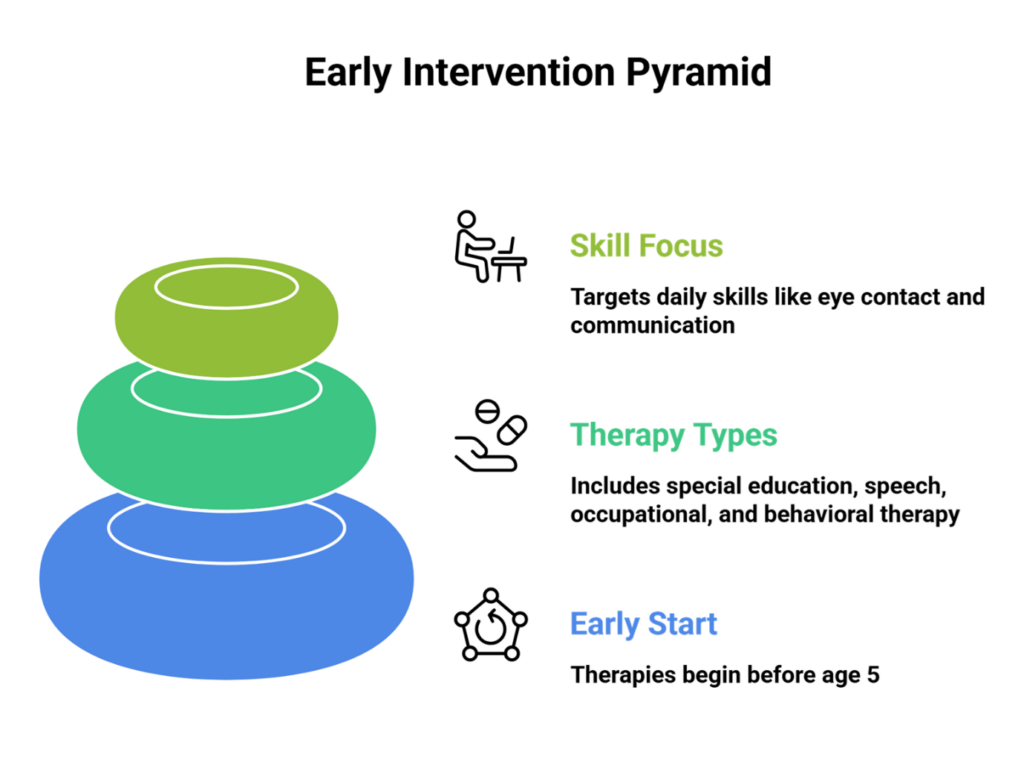
Early intervention simply means starting therapies and support as soon as possible, usually before the age of 5, often even around 2–3 years.
It can include:
- Special education sessions
- Speech therapy
- Occupational and sensory therapy
- Behaviour and social-skill training
These services focus on daily skills like eye contact, play, communication and handling sounds, lights or touch.
What is Early Intervention for Autism?
In practical terms, What is Early Intervention for Autism? is a plan of regular, structured activities designed for a young child on the spectrum, guided by trained professionals and supported by the family.
The main goals are:
- To improve understanding and use of language
- To build social skills like sharing, taking turns and playing
- To reduce frustration, meltdowns and rigid behaviours
- To help the child become more independent over time
Key Benefits of Starting Early
Research shows strong benefits of early intervention for autism when started in the toddler and preschool years.
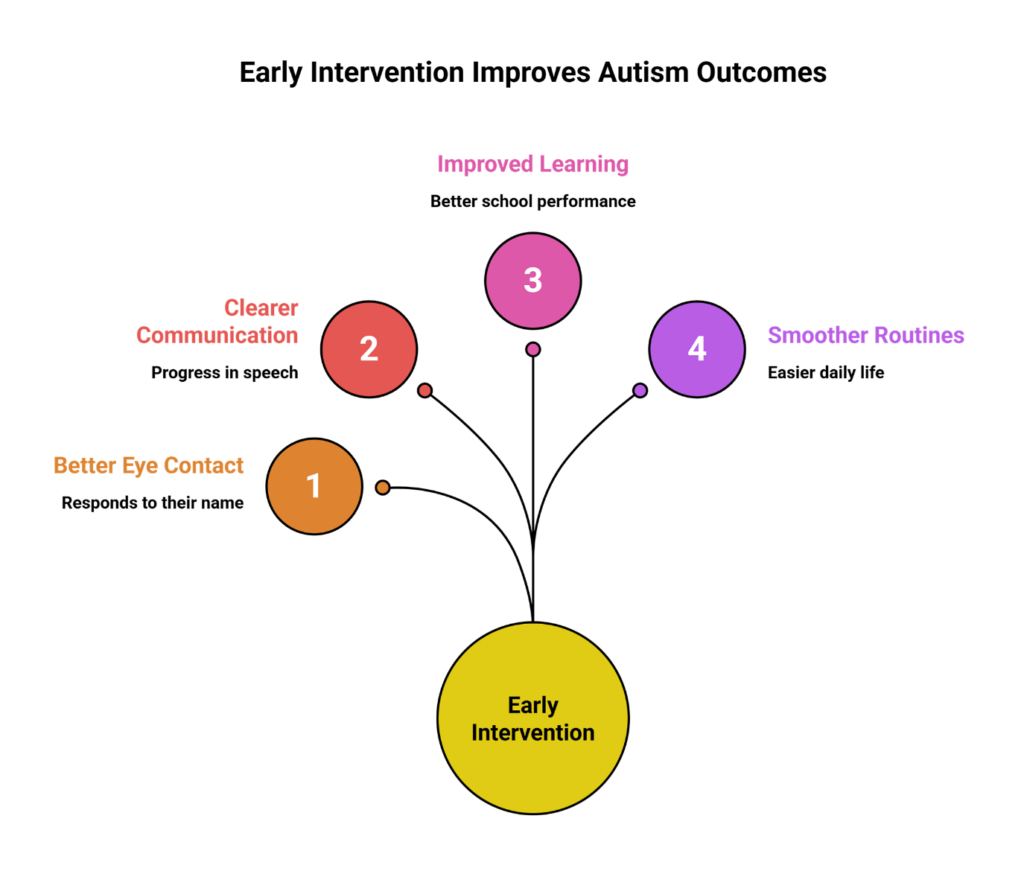
Some important changes parents often notice are:
- Better eye contact and response to their name
- Clear progress in speech or alternative communication
- Improved learning in school later on
- Smoother daily routines at home
Over time, the benefits of early intervention for autism can also include improved thinking skills, better behaviour and more confidence in social situations.
How Early Intervention Works in a Special School Setting
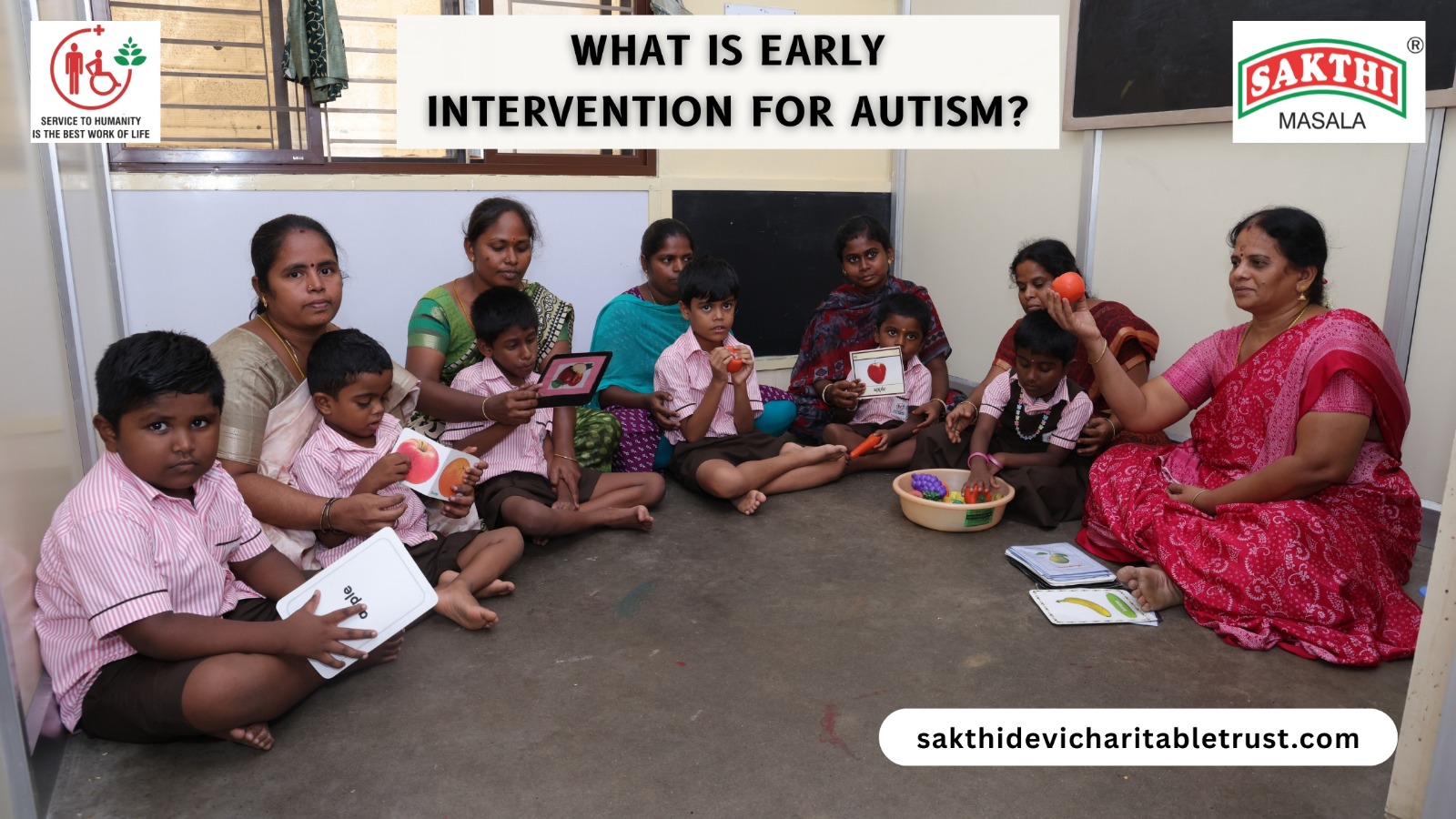
For many families, a special school for autism offers a safe and structured place for early intervention.
In such a school, children may receive:
- Small-group or one-to-one teaching
- Therapy sessions included in the school timetable
- Individual education plans based on each child’s strengths and needs
- Guidance for parents on how to continue activities at home
This joined-up approach ensures that learning does not stop at the classroom door, but continues in daily life.
What Parents Can Do Next
If you are still wondering What is Early Intervention for Autism? remember it is not one single therapy, but a team effort that starts early and continues with love and patience.
If you are in or around Erode and are looking for early support, therapies and schooling under one roof, you can reach out to Sakthidevi Charitable Trust’s services, including our special school and related programmes for children with autism, to discuss the right early intervention path for your child.

Leave a Reply